
Scenarios
Steel & Specialty Steel · Heat Treatment · QuenchingExample scenario
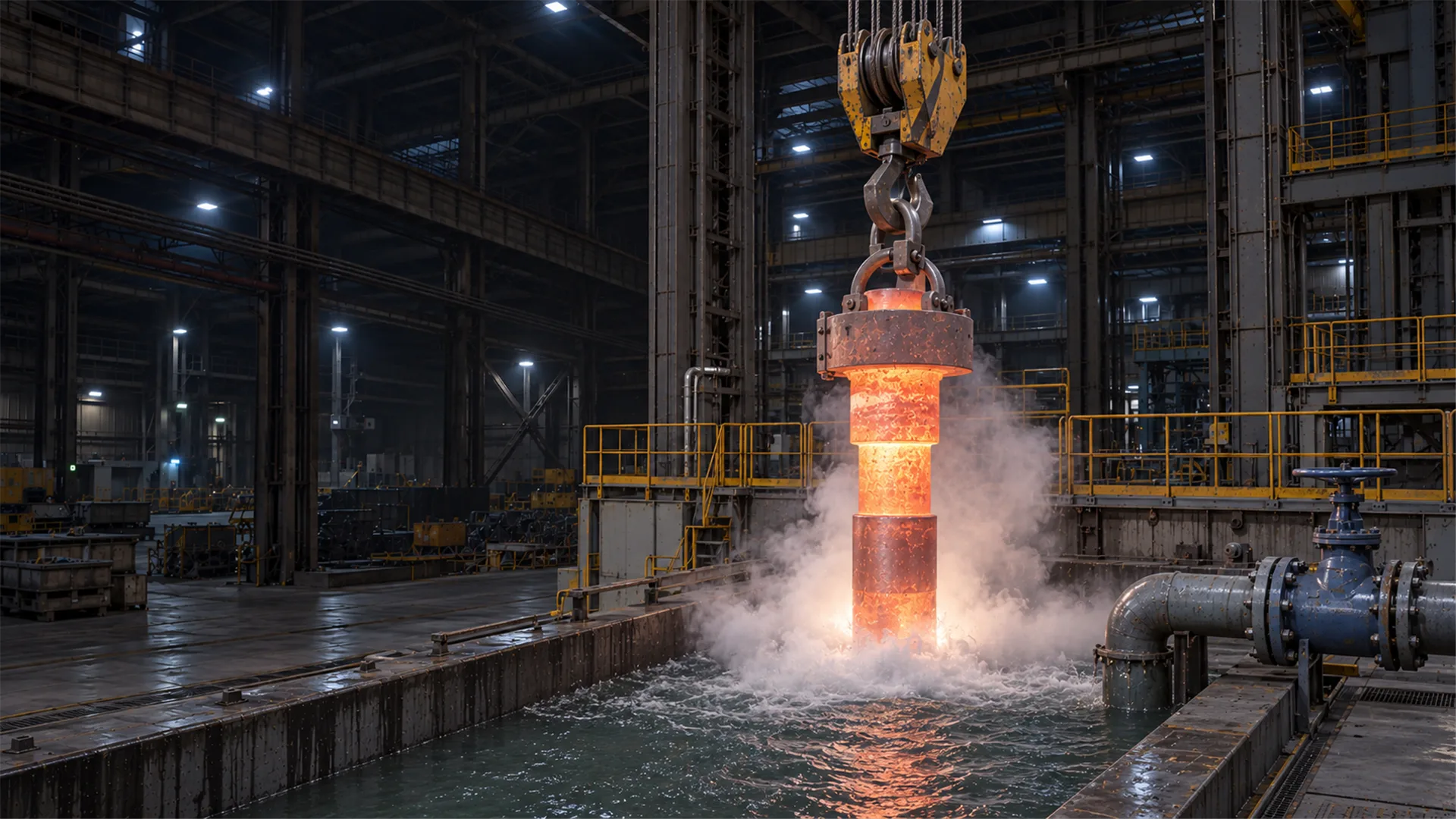
Quench Cooling for Forged Shafts
Fixed quench conditions per steel grade ignore changes in water and charge temperature. Hardness scatters and distortion and cracking defects follow.
−22%Hardness spread
−15%Distortion defects
Example scenario. Figures are illustrative.
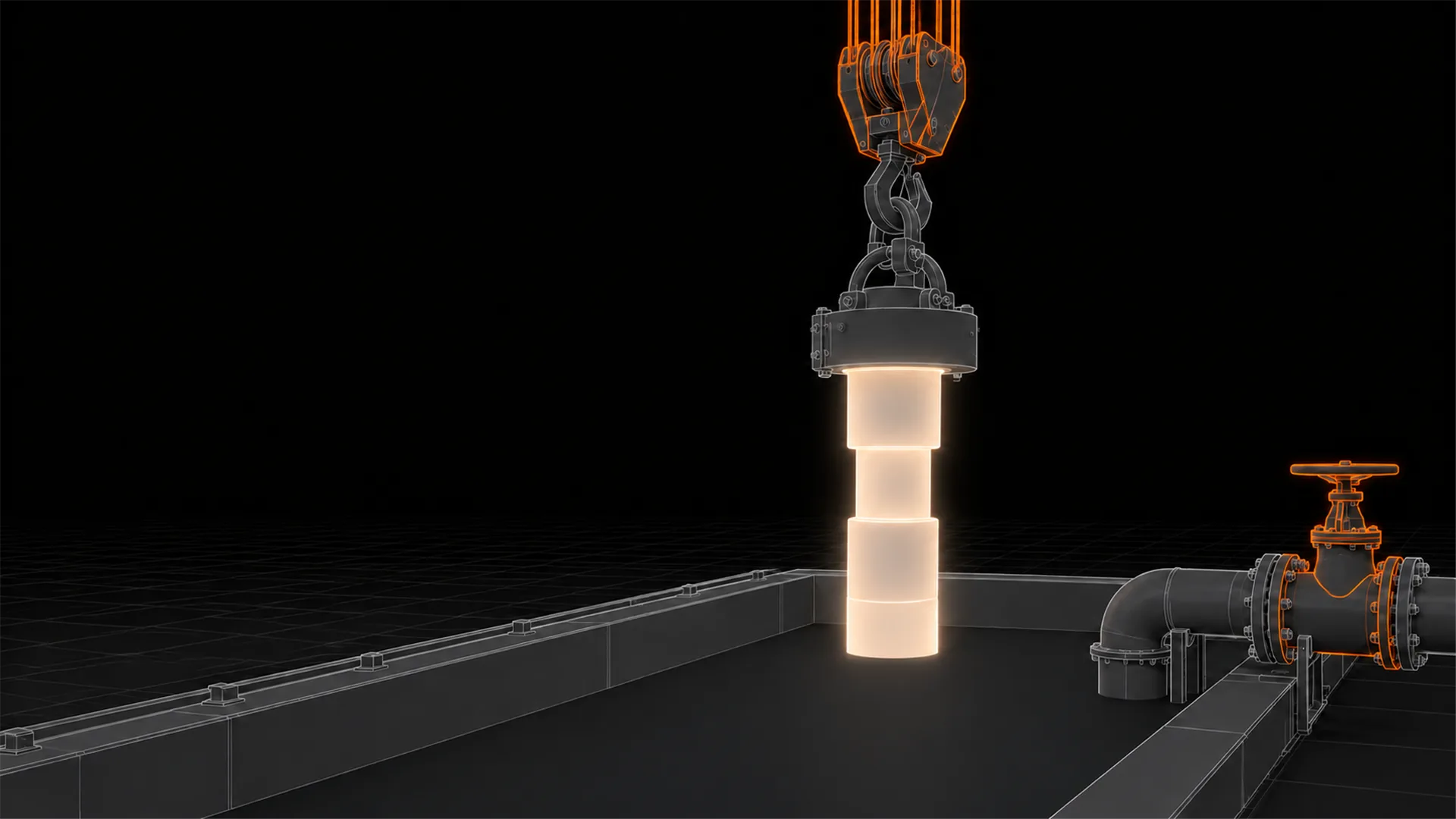
Plant dataTank temp.31°C
PrescriptionImmersion speed0.8 → 0.6 m/s
PrescriptionImmersion time90 → 110 s
PrescriptionCooling water180 → 210 m³/h
Expected resultHardness spread±18 → ±14 HB
Plant dataPrescriptionExpected result
On the floor
- Situation
- In midsummer, with cooling water at 36 ℃, a 600 mm diameter shaft is due for charging.
- Trade-off
- Faster immersion secures hardness but increases distortion and cracking; slower immersion misses the hardness spec.
- Limit
- Only a fixed table per grade exists, with no basis for reflecting part size and that day's water temperature.
01
02
03
How we solve it
Learns how cooling conditions affect quality from charge conditions, water temperature, cooling settings and hardness records, then calculates immersion speed, time and flow within the range validated by data.
Plant data
- Charge temperature
- Cooling water temperature
- Part size & weight
- Steel chemistry
Prescription
- Immersion speed0.8 m/s → 0.6 m/s
- Immersion time90 s → 110 s
- Cooling water180 m³/h → 210 m³/h
Also adjustedAir-cooling time before charging
Constraints
- Surface hardness spec HB 280–330
- Cooling water ≤ 40 ℃
Expected results
Hardness spread−22%
±18 HB→±14 HB
BeforeExpected
Distortion defects−15%
2.0%→1.7%
BeforeExpected
Could this work for your process?
Tell us about your process and data, and we will assess feasibility.
Scenarios
Steel & Specialty Steel
Leaching/Neutralization
Example scenarioLeaching/Neutralization
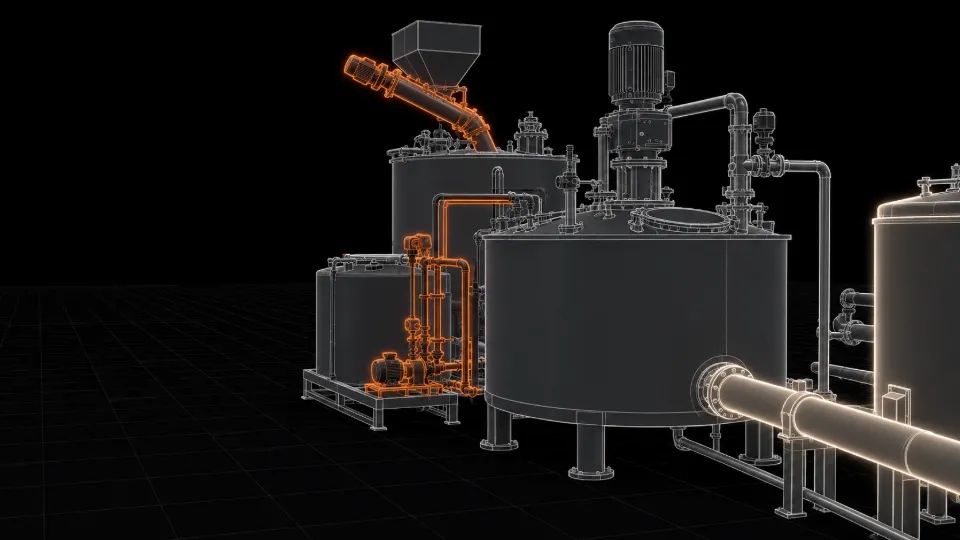
pH Control in Leaching & Neutralization
Prescribes caustic soda dosing to hold pH on target and raise nickel recovery.
+4.8%
Nickel recovery
−62%
Time out of pH range
−9%
Caustic soda usage
Caustic soda dosing 12.0 L/h → 13.4 L/h
Steel & Specialty Steel
Electric Arc Furnace
Example scenarioElectric Arc Furnace
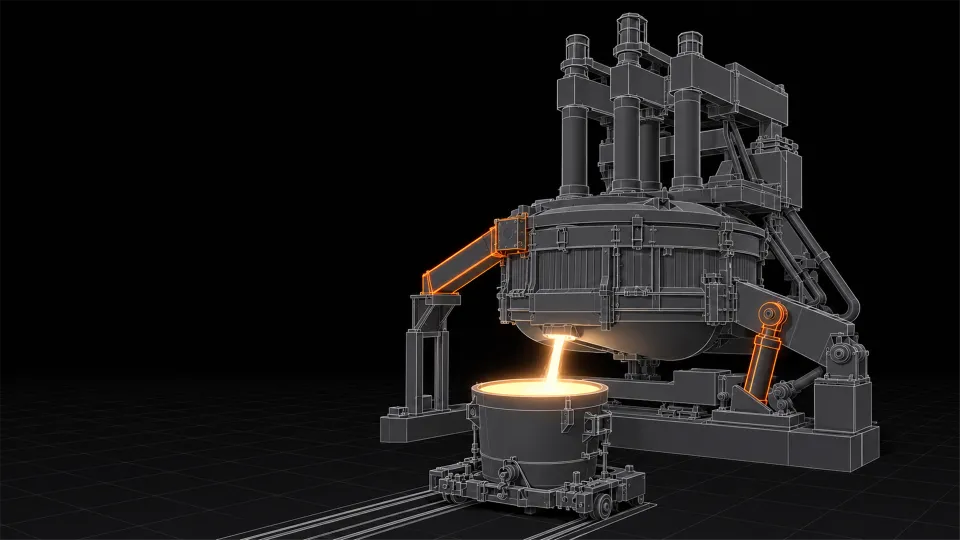
EAF Flux Addition
Prescribes lime addition to hit tapping temperature and cut power use.
+12%p
Tapping temp. hit rate
−3.1%
Power intensity
−8%
Lime consumption
Voltage tap 6 → 5
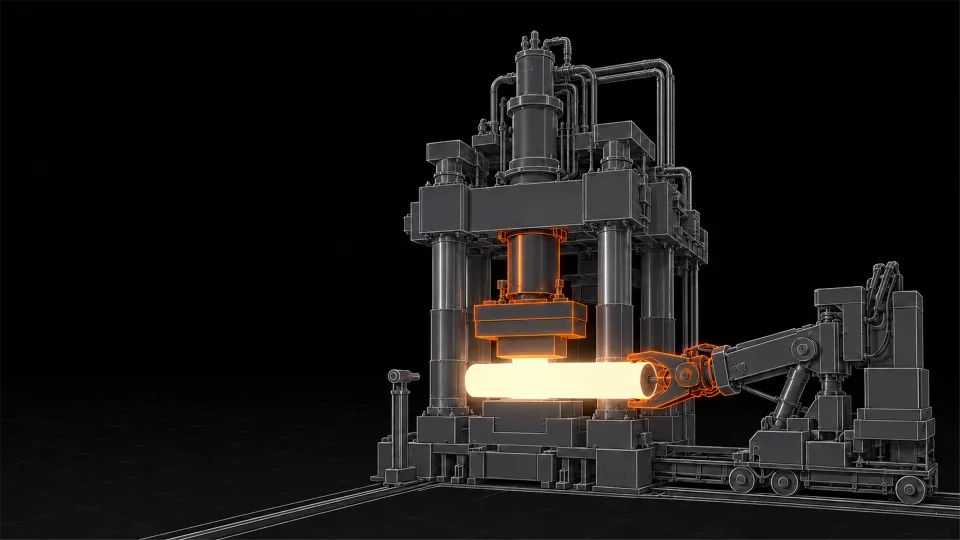
Steel & Specialty Steel
Open-Die Press
Example scenarioOpen-Die Press
Forging Pass Reduction Schedule
Prescribes reduction per pass and rotation angle to cut reheating cycles.
−1
Reheats
−9%
Forging cycle time
Reduction per pass 45 mm → 38 mm